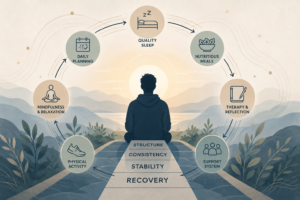

Rebuilding Self-Trust in Early Recovery: Why It Matters and How to Start
Early recovery brings a mix of relief, hope, fear, and uncertainty. For many people, one of the hardest parts is not the physical withdrawal or the lifestyle changes. It is the quiet realization that they no longer trust themselves. After years of making promises but not being able to keep them, or hiding the truth even from themselves, rebuilding self-trust can feel like climbing a mountain.
But self-trust is a skill that can be rebuilt. It does not require perfection, only consistency, honesty, and patience with yourself. Below are some ways to begin strengthening this foundation, one small step at a time.
1. Start with One Honest Moment at a Time
Recovery encourages transparency, yet being honest with yourself can feel surprisingly vulnerable. Many people in early recovery find themselves unintentionally minimizing emotions or glossing over urges. This is normal. The goal is not to be perfect, but to create moments of honesty throughout the day.
This might look like acknowledging, “I feel overwhelmed right now,” or “I’m having cravings and I need support.” You can learn more about early warning signs and emotional cues in our previous post on identifying triggers and staying grounded.
2. Set Small, Realistic Commitments
One of the most common myths about recovery is that big, sweeping changes prove your strength. In reality, trust is rebuilt through small, repeatable actions. When you set a commitment that is realistic, you give yourself an opportunity to follow through, which strengthens your sense of competence.
Start with things like:
-
Attending one meeting or group per week.
-
Drinking water before bed.
-
Writing a three-sentence journal entry each night.
Over time, these small successes compound into meaningful confidence.
3. Practice Self-Compassion Instead of Self-Punishment
Many people assume being hard on themselves will keep them accountable. In fact, harsh self-talk often undermines recovery. Research from organizations such as SAMHSA shows that compassion and connection promote long-term sobriety much more effectively than shame.
Try replacing “I messed up, I’m failing” with “I slipped, and I’m choosing to get back on track.” Learning to speak to yourself with compassion is a crucial part of building self-trust.
4. Share Your Truth in Safe Relationships
Trust grows in connection. When you practice honest communication with a therapist, support group, or trusted loved one, you reinforce that you can show up authentically without hiding.
If you are in outpatient treatment, your counselor can help you explore patterns that weaken self-trust, like people-pleasing, avoidance, or perfectionism. Sharing your real experiences in a group setting also helps normalize the challenges of recovery and reduces the pressure to appear “strong.”
5. Celebrate Your Progress, Even When It Feels Small
Recovery often feels slow because the most important changes happen internally. You may notice that you handle conflict better, you pause before reacting, or you take responsibility more quickly. These are enormous signs of growth.
Documenting your progress through journaling, therapy, or milestones helps you reflect on how far you have come. Confidence does not come from the absence of mistakes, but from the resilience you show each time you move forward.
You Don’t Have to Rebuild Alone
Rebuilding self-trust is a process that unfolds gradually, often with support from professionals who understand the emotional, psychological, and behavioral layers of addiction. Sarasota Addiction Specialists provides evidence-based outpatient treatment that meets you where you are. Whether you are beginning your recovery journey or building long-term stability, our team is here to walk with you.
If you or someone you love needs support, call us at (941) 444-6560 or visit www.sarasotaaddictionspecialists.com.