
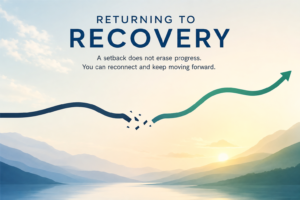
A Relapse Does Not Erase Progress
One of the most damaging beliefs in recovery is the idea that a slip means everything has been lost. Many people view relapse as proof that they failed, that treatment did not work, or that they are somehow incapable of recovery. This mindset often creates overwhelming shame and makes it harder to return to support.
In reality, recovery is rarely a perfectly straight path. Many people experience setbacks during the recovery process. A slip is serious and deserves attention, but it does not erase the progress, insight, healing, or stability that was built beforehand.
Recovery is not measured by perfection. It is measured by the willingness to continue moving forward, even after difficult moments.
Why Shame Makes Recovery Harder
After a relapse or slip, shame often becomes one of the biggest obstacles to healing. People may begin criticizing themselves harshly or believing they have disappointed everyone around them. Thoughts such as “I ruined everything” or “I might as well give up now” can quickly take over.
These reactions can become more dangerous than the slip itself.
Shame often pushes people into isolation. Someone may avoid therapy appointments, stop attending support groups, ignore phone calls, or distance themselves from healthy relationships because they feel embarrassed or hopeless. Unfortunately, isolation increases emotional distress and can make continued substance use more likely.
Recovery becomes much harder when someone feels completely alone.
This is why responding with honesty and self-awareness is so important. A setback should be treated as information, not proof of failure. Instead of asking, “What is wrong with me?” it can be more helpful to ask, “What was happening emotionally, mentally, or environmentally before this happened?”
That shift creates room for learning rather than punishment.
Understanding What Led to the Slip
Relapse usually does not happen randomly. In many cases, emotional stress, exhaustion, isolation, relationship conflict, anxiety, depression, boredom, or overwhelming life circumstances gradually build beforehand.
Sometimes the warning signs are subtle.
A person may begin skipping routines, withdrawing emotionally, neglecting sleep, avoiding support systems, or feeling emotionally numb long before the actual relapse occurs. Identifying these patterns is an important part of strengthening long-term recovery.
Therapy can help people examine these moments without judgment. Instead of focusing only on the behavior itself, treatment often explores the emotional experiences underneath it.
For example:
- Was stress becoming unmanageable?
- Was emotional support decreasing?
- Were old environments or relationships becoming triggering?
- Was mental health beginning to decline?
- Had recovery routines started slipping?
Understanding these patterns helps people develop healthier responses moving forward rather than repeating the same cycle.
Responding Constructively After Relapse
One of the most important things someone can do after a slip is reconnect with support quickly.
The longer shame and isolation continue, the harder it often becomes to return. Reaching out early can reduce the emotional spiral that frequently follows relapse.
Constructive steps may include:
- Contacting a therapist or counselor
- Returning to group therapy
- Being honest with trusted support people
- Rebuilding routines and structure
- Removing immediate triggers or risky environments
- Practicing self-care instead of self-punishment
This process is not about excusing relapse. It is about responding in a way that supports recovery rather than deepening shame.
Group therapy can be especially helpful during this time because it reduces isolation and reminds people they are not alone in struggling. Hearing from others who have experienced setbacks often helps reduce hopelessness and rebuild motivation.
You can learn more about group therapy here:
Sarasota Addiction Specialists Group Therapy
Recovery Is Still Possible
Many people who achieve long-term sobriety have experienced setbacks somewhere in their recovery journey. What often matters most is not whether a slip occurred, but how someone responds afterward.
Recovery is built through consistency, honesty, support, and persistence over time.
A difficult moment does not define someone’s future. It does not erase growth. It does not remove the possibility of healing.
The goal is not perfection. The goal is continuing to come back, continuing to learn, and continuing to move forward even when recovery feels difficult.
Returning to Support
Sarasota Addiction Specialists offers outpatient addiction treatment and relapse support in Sarasota.
If you or someone you care about is struggling after a relapse or slip, support is available. Call (941) 444-6560 to learn more about treatment options and recovery support services.