
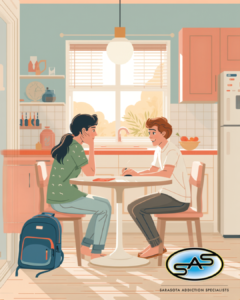
The start of a new school year can bring excitement, pressure, and uncertainty. New classes, changing friendships, sports, social media, academic expectations, and a different daily schedule may all affect a teenager’s mood and behavior. For parents and caregivers, this transition is also a useful time to talk about alcohol, cannabis, nicotine, prescription medications, and other drugs.
The goal is not to deliver one perfect speech or force a confession. It is to build an ongoing conversation in which your teen knows the family expectations, understands the risks, and feels able to ask for help without being shamed.
SAMHSA’s back-to-school resources encourage parents, caregivers, and educators to prepare for behavioral-health stressors alongside the practical parts of returning to school. Substance-use prevention belongs in that preparation, but the conversation works best when it is grounded in connection rather than fear.
Why Back-to-School Transitions Deserve Attention
Transitions can increase stress even when a teen appears excited. A student may be adjusting to a larger campus, a demanding schedule, new peer groups, greater independence, or worries about fitting in. SAMHSA notes that grades, social pressure, appearance concerns, and major transitions can contribute to stress and may be reasons some young people turn to alcohol.
Stress does not mean a teen is using substances, and a difficult week is not proof of a disorder. It does create an opportunity to ask how your child is coping and to make sure healthier options and trusted adults are available before a crisis develops.
Start With Curiosity, Not an Accusation
Choose a private, relatively calm moment—not the middle of an argument or the minute your teen walks through the door. You might begin with what you have noticed or with a general question about the school environment.
Try an open question. “What are students at school saying about vaping or drinking?” or “What feels most stressful about going back this year?” can be easier to answer than “You are not using anything, right?”
Listen before correcting. Let your teen finish. Reflect back what you heard and ask a follow-up question. Listening does not mean agreeing with every choice; it shows that honesty will be met with attention rather than immediate humiliation.
Use clear, accurate language. Explain your concerns without exaggeration. Discuss health, safety, school rules, driving, medication sharing, and the ways substances can affect judgment. Avoid scare tactics that your teen can easily dismiss.
Keep the door open. One short conversation followed by regular check-ins is usually more useful than an annual lecture. Let your teen know they can call you for help in an unsafe situation, even when another conversation or consequence must happen later.
Set Expectations and Make a Safety Plan
Teens benefit from knowing exactly what the household rules are and why they exist. Be specific about alcohol, cannabis, vaping, other drugs, driving, riding with an impaired driver, parties, and the use or sharing of prescription medication. Explain the consequences in advance and apply them consistently rather than inventing them in anger.
A practical safety plan can include a no-questions-asked ride home in the moment, a code word for leaving an uncomfortable situation, the names of other adults your teen may call, and a plan for what to do if someone is unresponsive or may have taken an unknown substance. In a medical emergency, call 911. Safety comes before avoiding embarrassment or punishment.
Changes Worth Exploring
Adolescence naturally includes changes in privacy, sleep, mood, interests, and friendships. No single sign confirms substance use. Look for patterns, clusters of changes, or a marked departure from your teen’s usual behavior, especially when the changes continue or affect safety and functioning.
School changes: a sudden decline in attendance or performance, repeated discipline problems, or giving up activities that previously mattered.
Behavior changes: unusual secrecy, unexplained money problems, frequent rule-breaking, or a new pattern of coming home impaired.
Physical or emotional changes: significant shifts in sleep, appetite, energy, coordination, mood, anxiety, or concentration.
Environmental clues: unfamiliar pills, vaping devices, paraphernalia, alcohol containers, or repeated unexplained odors.
Many of these changes can also be related to depression, anxiety, trauma, bullying, attention difficulties, sleep problems, or other health concerns. A thoughtful assessment is more useful than jumping to a diagnosis.
If Your Teen Says They Have Used a Substance
Pause before reacting. Thank them for telling you, ask what they used and when, and first determine whether there is an immediate safety or medical concern. Do not promise secrecy if safety is at risk. Avoid interrogating them while they appear intoxicated; focus on medical safety and return to the fuller conversation when they are able to participate.
Later, explore the context: Was the use experimental, repeated, pressured, or connected to stress, sleep, pain, anxiety, depression, or a desire to fit in? What consequences have occurred? What feels hard to stop? The answers can help determine whether the next step is closer monitoring, a pediatric or behavioral-health evaluation, counseling, or a more structured level of care.
When to Seek Professional Support
Consider professional help when substance use is repeated, escalating, hard to control, connected to dangerous behavior, or interfering with school, relationships, responsibilities, or mental health. Seek prompt help for severe depression, suicidal thoughts, psychosis, violent behavior, overdose concerns, or dangerous withdrawal symptoms. Call or text 988 for a mental-health crisis, and call 911 for an immediate medical emergency.
A qualified professional can assess substance use alongside mental health, family stress, medications, and development. Treatment should be matched to the young person’s needs rather than based on punishment or labels.
Make the Conversation Part of Family Life
Parents remain influential even when teens seem more interested in peers. The strongest message is not only “do not use.” It is also: “Your safety matters, I will tell you the truth, and you can come to me when something is wrong.”
Sarasota Addiction Specialists offers counseling and outpatient addiction services for adolescents, adults, and families in Sarasota. If you are unsure what level of support is appropriate, call (941) 444-6560 for a confidential consultation.
Medical note: This article is for general education and is not medical advice. Signs of substance use can overlap with other medical and mental-health concerns. A qualified professional can provide an individualized assessment.
Frequently Asked Questions
- What age should parents start talking about alcohol and drugs?
Start before exposure is likely and keep the discussion age-appropriate. SAMHSA encourages early, direct conversations that continue as children gain independence. Younger children may need simple rules about medication and unknown substances; older teens need honest discussion about peer pressure, driving, parties, and how to get help.
- What if my teen refuses to talk?
Keep the invitation open and try again at a less pressured time, such as during a drive or shared activity. Use brief observations rather than a long lecture. If concerning changes continue, consult a pediatrician, counselor, or substance-use professional even if your teen is not ready to have a full conversation.
- Should I search my teen’s room or phone?
There is no universal answer. Balance privacy with the seriousness of the safety concern, your teen’s age, and the evidence you have. Be transparent about household expectations when possible. If you suspect immediate danger, access to unknown pills, or overdose risk, safety takes priority and professional guidance can help.
- How can I tell normal teen behavior from substance use?
One behavior rarely provides an answer. Pay attention to clusters of sustained changes, impaired functioning, intoxication, paraphernalia, or repeated risky incidents. Because similar changes can reflect anxiety, depression, bullying, trauma, or another condition, seek an assessment rather than trying to diagnose the cause yourself.