
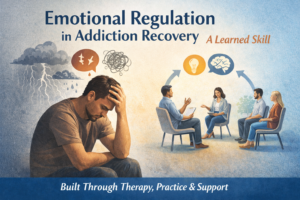
Emotional Regulation Is Not Automatic
Many people assume emotional regulation is something a person either naturally has or simply lacks. In addiction recovery, that belief can be especially discouraging. When emotions feel intense, unpredictable, or hard to manage, it is easy to think something is wrong or that progress is out of reach. In reality, emotional regulation is not automatic. It is a learned skill that develops over time through life experience, relationships, support, and practice.
For many people, substance use becomes a way to manage emotions that feel too big, too painful, or too confusing. Alcohol or drugs may temporarily numb sadness, reduce anxiety, soften anger, or create distance from stress. While that relief can feel immediate, it does not build the ability to cope in a lasting way. Recovery often means facing emotions without the shortcut that substances once provided. That process can be uncomfortable, but it is also where real growth begins.
Why Emotional Regulation Feels So Difficult in Recovery
Early recovery can bring emotions to the surface very quickly. Without substances to dull emotional reactions, feelings may seem sharper and more overwhelming than expected. A person may notice frustration, sadness, guilt, shame, fear, or loneliness more intensely than before. This can be alarming, especially for someone who has relied on substances for a long time.
That does not mean the person is weak or incapable of regulating emotions. More often, it means the skill has not had the chance to fully develop. Emotional regulation is something that must be learned, strengthened, and repeated. If a person has spent years escaping distress rather than working through it, the process of staying present with difficult feelings may feel unfamiliar at first.
Stress, trauma, and long-term avoidance can also interfere with emotional regulation. People who have lived in survival mode often learn to react quickly rather than reflect. Others may have grown up in environments where emotions were ignored, punished, or never discussed in healthy ways. In those situations, it makes sense that emotional regulation would feel challenging. The problem is not a lack of character. It is often a lack of safe opportunities to learn and practice.
Therapy as Skill Development
One of the most important parts of treatment is learning that emotional regulation can be built. Therapy is not about judging someone for struggling. It is about helping them develop the tools they need to respond differently.
In individual therapy, people can begin identifying the situations, thoughts, and memories that trigger emotional distress. They can learn how to name what they are feeling instead of becoming overwhelmed by it. This might sound simple, but putting words to emotions can reduce confusion and create space for more intentional choices. When a person can say, “I feel rejected,” “I feel anxious,” or “I feel ashamed,” they are already moving toward greater self-awareness and control.
Therapy also helps people practice new responses. Instead of reacting automatically, they can learn to pause, notice physical sensations, question old patterns, and choose healthier coping strategies. Over time, those moments of pause become more natural.
Group therapy can also play a powerful role in emotional regulation. In a supportive group setting, people hear that they are not alone in what they are experiencing. Shared experiences can reduce shame and provide perspective. Group members can also offer feedback, encouragement, and examples of coping skills in real time. For many people, programs like group therapy reinforce emotional growth by combining connection with accountability.
Progress Happens Gradually
Emotional regulation does not improve overnight. It grows through repetition, support, and patience. Each time a person tolerates discomfort without shutting down, lashing out, or turning to substances, they strengthen the skill. Even small moments matter. Taking a breath before reacting, asking for support, or sitting with a feeling instead of escaping it are all signs of progress.
Recovery is not about never feeling distressed. It is about building the capacity to move through distress in healthier ways. With time, emotions often become less frightening and more manageable.
Sarasota Addiction Specialists provides outpatient addiction treatment focused on emotional skill development in Sarasota, Florida. Call (941) 444-6560 or visit www.sarasotaaddictionspecialists.com.