
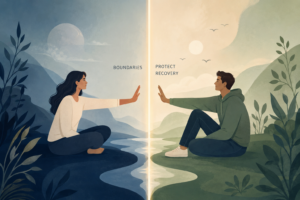
Recovery often brings significant changes to many areas of life, including relationships. While becoming sober is a personal decision, it can affect friendships in unexpected ways. For many people, some of their closest friends may still be actively using alcohol or drugs. Navigating these relationships can feel complicated, emotional, and sometimes painful.
You may care deeply about these individuals while simultaneously recognizing that certain situations put your recovery at risk. This is where boundaries become essential. Setting boundaries does not mean abandoning people you care about. Instead, it means creating conditions that allow your recovery to remain protected and sustainable.
Why Boundaries Become Necessary
Substance use often plays a significant role in social circles. Activities, conversations, celebrations, and routines may have revolved around drinking or drug use for years. Once recovery begins, many of those familiar situations can suddenly feel unsafe or triggering.
Friends who continue to use substances may not fully understand the challenges of early recovery. Some may unintentionally encourage old behaviors. Others may pressure you to attend events where substance use is common. Even well-meaning friends may struggle to understand why your priorities have changed.
Without clear boundaries, exposure to these situations can increase stress, cravings, and relapse risk. Recovery requires creating an environment that supports long-term sobriety, even when that means making difficult choices.
Understanding Healthy Boundaries
Boundaries are limits that protect your emotional, physical, and mental wellbeing. They help define what is acceptable and what is not.
In recovery, healthy boundaries may include:
- Avoiding parties where alcohol or drugs are present
- Declining invitations that feel risky
- Limiting contact with people who encourage substance use
- Leaving situations that make you uncomfortable
- Being honest about your recovery goals
- Protecting your time for therapy, support groups, and self-care
Many people mistakenly believe boundaries are selfish or punitive. In reality, boundaries are acts of self-respect. They help create stability during a period of significant personal growth.
Why Setting Boundaries Feels So Difficult
Even when boundaries are necessary, they can be uncomfortable to establish.
Many people fear disappointing others. Some worry they will lose friendships entirely. Others feel guilty for changing relationship dynamics that once seemed normal.
These feelings are understandable. Human beings naturally seek connection and belonging. Recovery can sometimes create a sense of separation from people who were once central to daily life.
It is important to remember that discomfort does not mean a boundary is wrong. Often, the discomfort comes from doing something unfamiliar rather than doing something harmful.
Therapy can help individuals explore these emotions and build confidence in setting limits that support recovery.
How Friends May Respond
Not everyone will react to boundaries in the same way.
Some friends may be supportive and respectful. They may adjust plans, avoid offering substances, and encourage your recovery efforts. These relationships often grow stronger over time because they are built on mutual respect.
Others may respond with frustration, confusion, or resistance. They may view your boundaries as rejection or criticism of their choices. While these reactions can be difficult, they are ultimately their responsibility to manage.
Healthy relationships can adapt to change. Relationships that depend entirely on substance use often struggle when sobriety enters the picture.
Recovery Must Remain the Priority
One of the most important lessons in recovery is learning that protecting sobriety is not selfish.
Choosing not to attend certain events, limiting contact with specific individuals, or restructuring social habits may feel uncomfortable initially. However, maintaining recovery must come before preserving every relationship exactly as it existed before.
As recovery progresses, many people discover new friendships through therapy, support groups, volunteer opportunities, hobbies, and community involvement. These connections often provide encouragement and accountability that support long-term wellness.
Individual therapy can help identify personal triggers and strengthen boundary-setting skills. Group therapy also offers valuable support from others who understand the challenges of navigating relationships during recovery.
Learn more about our group therapy services.
Support for Navigating Change
Recovery involves growth, and growth often requires change. While setting boundaries with friends who still use substances can be difficult, those boundaries can play a critical role in protecting your health, stability, and future.
At Sarasota Addiction Specialists, we help individuals build the skills needed to maintain recovery while navigating real-life challenges and relationship changes.
If you or a loved one needs support, call (941) 444-6560 or visit https://www.sarasotaaddictionspecialists.com to learn more about our outpatient addiction treatment programs in Sarasota, Florida.