
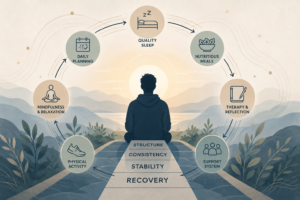
The Role of Routine in Preventing Relapse
Recovery often feels emotionally unpredictable in the beginning. Thoughts, emotions, stress levels, and energy can fluctuate quickly, especially during the early stages of sobriety. While motivation and determination are important, recovery also requires consistency. One of the most effective ways to create that consistency is through routine.
Daily structure helps reduce instability and creates a foundation that supports long-term recovery. Without some form of routine, stress, boredom, impulsive decisions, and emotional overwhelm can become more difficult to manage. Over time, this increases vulnerability to relapse.
Routine does not eliminate challenges, but it helps people respond to those challenges more effectively.
Why Routine Matters So Much
Substance use often disrupts normal daily structure. Sleep schedules become inconsistent. Eating habits change. Responsibilities may be neglected. Emotional regulation becomes more difficult. Recovery involves rebuilding stability in both emotional and practical ways.
Routine helps create predictability during a time that may otherwise feel uncertain.
Even simple habits such as waking up at the same time, attending therapy consistently, preparing meals regularly, or scheduling healthy activities throughout the week can help create a greater sense of control and emotional balance.
When life feels chaotic internally, external structure becomes even more important.
Routine Reduces Decision Fatigue
One reason routines are so helpful is because they reduce decision fatigue.
When someone is constantly making choices throughout the day, emotional exhaustion increases. Stress builds more quickly, especially when someone is already coping with cravings, emotional discomfort, or recovery-related challenges.
Routine reduces the number of decisions that need to be made.
For example:
- Having a consistent sleep schedule reduces late-night impulsivity
- Planning meals ahead of time improves physical and emotional regulation
- Scheduling therapy and support meetings creates accountability
- Setting regular exercise or self-care routines improves stress management
These routines may seem small, but over time they create stability that supports long-term sobriety.
Recovery becomes more sustainable when healthy behaviors become habits rather than choices that require constant motivation.
Structure Supports Emotional Regulation
Predictability helps regulate the nervous system.
When routines are inconsistent, stress levels often rise. Sleep becomes disrupted, emotions feel more reactive, and coping becomes more difficult. Many people in recovery notice that periods of instability or unstructured time increase emotional vulnerability.
Consistent routines help calm the mind and body.
Regular sleep improves emotional resilience. Consistent meals help stabilize energy and mood. Planned activities reduce isolation and boredom. Healthy routines also help create a stronger sense of momentum and progress.
Over time, these patterns help recovery feel more manageable and less overwhelming.
Therapy often focuses on helping people create realistic routines that support emotional stability rather than perfection. The goal is not rigid control. The goal is consistency that feels sustainable.
Group therapy can also play an important role in creating routine and accountability. Attending structured treatment regularly helps reinforce healthy patterns while reducing isolation.
Learn more about structured support through group therapy here:
https://www.sarasotaaddictionspecialists.com/php/
Boredom and Isolation Increase Risk
One of the biggest relapse risks during recovery is unstructured time.
When people feel bored, disconnected, emotionally restless, or isolated, old coping patterns can resurface more easily. Without routine, it becomes easier to stay stuck in unhealthy thought patterns or impulsive behaviors.
Routine creates engagement.
Having planned activities throughout the day helps reduce emotional drifting and increases a sense of purpose. This does not mean every moment must be productive or scheduled. Rest and flexibility are important too. However, having some predictable structure creates stability during difficult periods.
Even simple routines like morning walks, evening check-ins, journaling, attending meetings, or eating dinner at consistent times can make a meaningful difference.
Small Routines Matter
Many people avoid routine because they associate it with perfection or rigid schedules. In reality, healthy structure is flexible.
Recovery is not about following a flawless daily plan. It is about creating enough consistency to support emotional and physical stability.
Small routines often matter more than dramatic changes.
Going to sleep at a healthier time, attending therapy consistently, drinking enough water, spending time outside, or checking in with supportive people regularly are all examples of routines that strengthen recovery over time.
Progress happens through repetition.
The more often healthy habits are practiced, the more natural they begin to feel.
Support Through Structure
Recovery becomes more sustainable when people have support, accountability, and structure that help them stay grounded during difficult moments.
Sarasota Addiction Specialists offers structured outpatient addiction treatment in Sarasota designed to help individuals build long-term stability and recovery skills.
Call (941) 444-6560 or visit the website to learn more about available treatment and support services.