
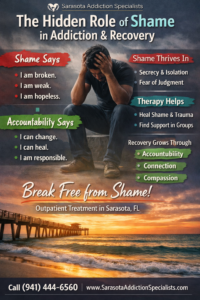
The Hidden Role of Shame in Addiction and Recovery
Shame plays a powerful but often unspoken role in addiction. While substance use is frequently discussed in terms of behavior, consequences, or physical dependence, the emotional weight of shame can quietly drive addiction forward and make recovery feel unreachable. Many people struggling with substance use do not simply believe they have a problem. They believe they are the problem.
Shame tells people they are broken, weak, or fundamentally flawed. Unlike guilt, which focuses on behavior, shame attacks identity. It creates the sense that something is wrong at the core of who you are. When addiction is fueled by shame, using substances can become both a coping mechanism and a source of deeper self-blame, creating a cycle that feels impossible to escape.
How Shame Keeps Addiction in Place
Shame thrives in secrecy and isolation. It convinces people that if others knew the truth about them, they would be judged, rejected, or abandoned. As a result, many people hide their substance use for years, even when they desperately want help.
This is one reason people often delay treatment. Shame whispers that asking for help means admitting failure. It suggests that recovery is for “other people,” not for someone who feels too damaged or too far gone. Over time, this belief erodes hope and reinforces avoidance, even as the consequences of addiction grow.
Research has consistently shown that shame increases relapse risk and undermines recovery motivation. According to the National Institute on Drug Abuse, emotional stressors such as shame and self-criticism significantly increase vulnerability to substance use and relapse, particularly in early recovery.
When shame dominates, substances often serve as temporary relief from emotional pain. Unfortunately, once the effects wear off, shame returns stronger than before, reinforced by regret, secrecy, and broken trust.
Shame vs Accountability in Recovery
A critical shift in recovery involves understanding the difference between shame and accountability.
Shame focuses on who someone is. It says, “I am bad,” “I am weak,” or “I am hopeless.” Accountability, on the other hand, focuses on behavior. It says, “This behavior caused harm, and I can take responsibility for changing it.”
Recovery grows through accountability, not shame. Accountability creates space for honesty, repair, and growth. Shame shuts those processes down.
Effective addiction treatment emphasizes responsibility without humiliation. This approach allows individuals to acknowledge the impact of their substance use while still believing they are worthy of care, support, and change. Without this distinction, people may comply with treatment outwardly while remaining emotionally stuck in self-loathing, which often leads to relapse.
How Therapy Helps Reduce Shame
Therapy plays a central role in separating identity from behavior. In individual therapy, people can explore where their shame originated, often tracing it back to early experiences of criticism, trauma, neglect, or inconsistent emotional support. Many individuals struggling with addiction learned early on that their feelings or needs were unacceptable, setting the stage for both shame and substance use as coping mechanisms.
Group therapy is especially powerful in reducing shame. Hearing others share similar experiences breaks the illusion of being alone or uniquely flawed. When people realize that their thoughts, fears, and struggles are shared by others, shame loses much of its power.
At Sarasota Addiction Specialists, group therapy is a core part of treatment because it helps normalize recovery struggles while fostering accountability and connection.
Over time, consistent therapeutic support allows individuals to speak openly about cravings, setbacks, and emotional pain without fear of judgment. This openness is essential for sustainable recovery.
The Substance Abuse and Mental Health Services Administration emphasizes that recovery-oriented care must address emotional health, not just substance use itself.
Moving Forward Without Shame
Letting go of shame does not mean ignoring responsibility. It means recognizing that addiction is a condition that can be treated, not a moral failure. When shame loosens its grip, recovery begins to feel possible instead of punishing.
People who recover successfully often report a shift from self-condemnation to self-understanding. They learn that change is not driven by hating themselves into sobriety, but by developing compassion, structure, and support.
Recovery is not about becoming someone new. It is about reconnecting with who you were before shame took over.
Sarasota Addiction Specialists offers structured outpatient addiction treatment in Sarasota, Florida, designed to address both the behavioral and emotional aspects of substance use. Supportive therapy, accountability, and community are central to our approach.
If shame has been keeping you from asking for help, you are not alone, and you are not beyond support.
Call (941) 444-6560 or visit https://www.sarasotaaddictionspecialists.com to learn more about treatment options and take the next step toward recovery without shame.